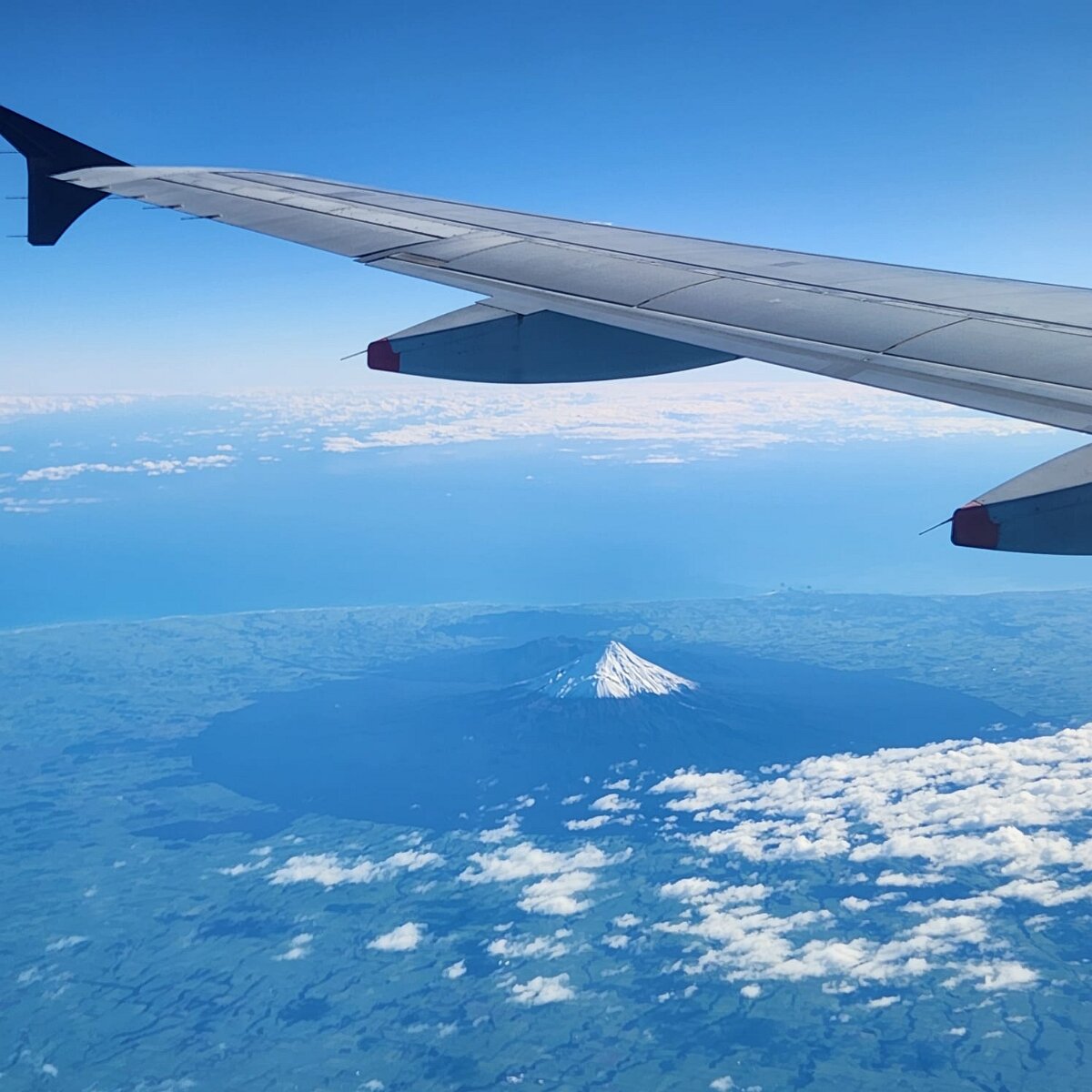
As we flew to Rotorua we saw Mount Taranaki, a dormant stratovolcano located in New Zealand's North Island. It is also known as Mount Egmont and officially as…

Upon arrival in Rotorua we toured the Te Puia Maori Arts and Crafts Institute.
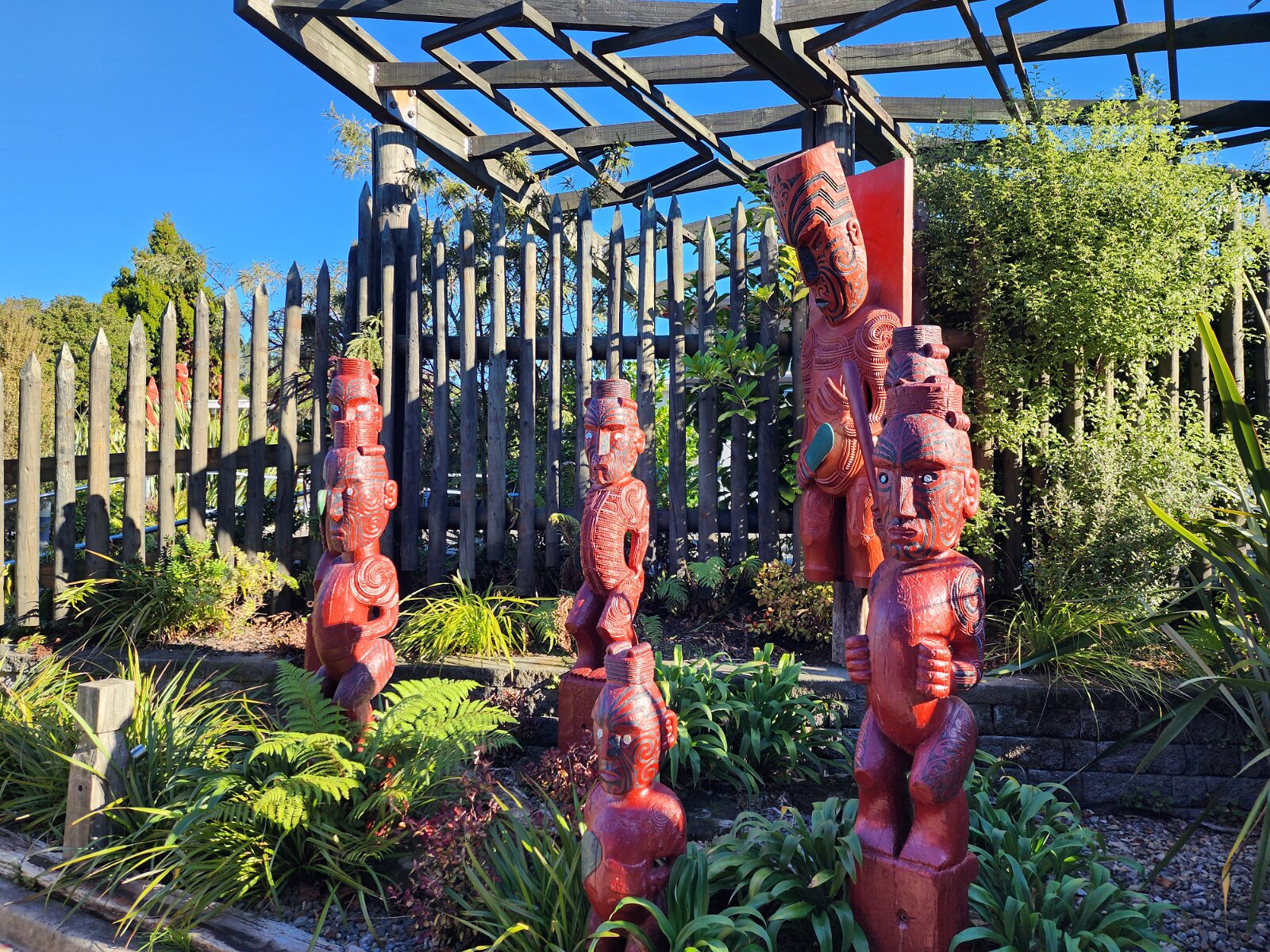
We were greeted by a collection of traditional Māori carvings, known as pou, at Te Puia. Pouwhenua, a specific type of pou, are carved wooden posts that mark…
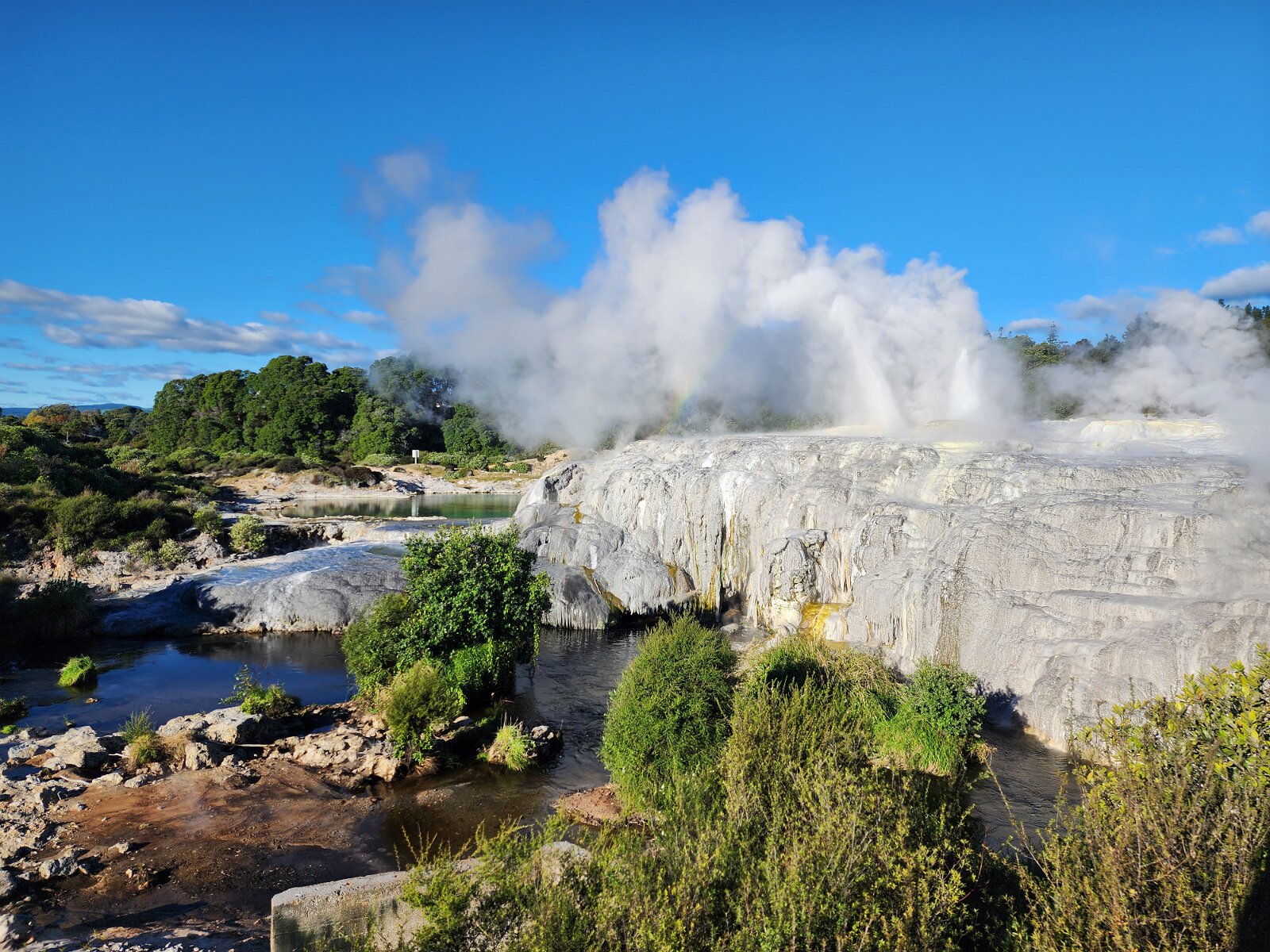
Te Puia also has the Southern Hemisphere’s largest natural geyser, Pōhutu Geyser, which naturally erupts skyward over 15 times during a day. This is New…
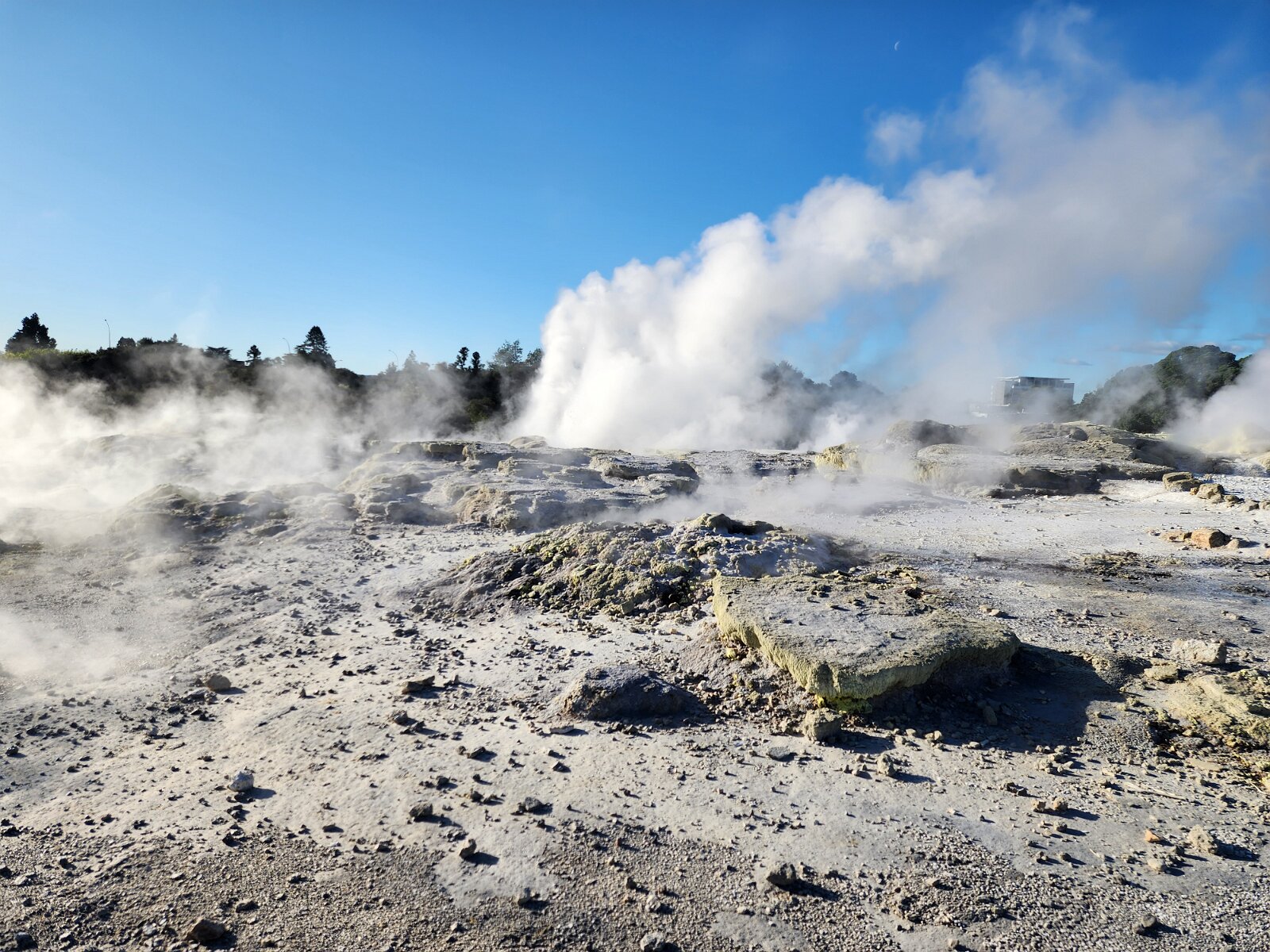
We saw boiling hot pools and bubbling mud, and learned how the Maori utilised and respected the ever-changing forces beneath their land.
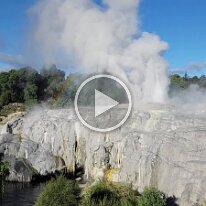
In Māori myths and legends it is said that when Te Hoata and Te Pupu (Goddesses of Fire) travelled from Hawaiki in the form of fire to relieve their brother’s…
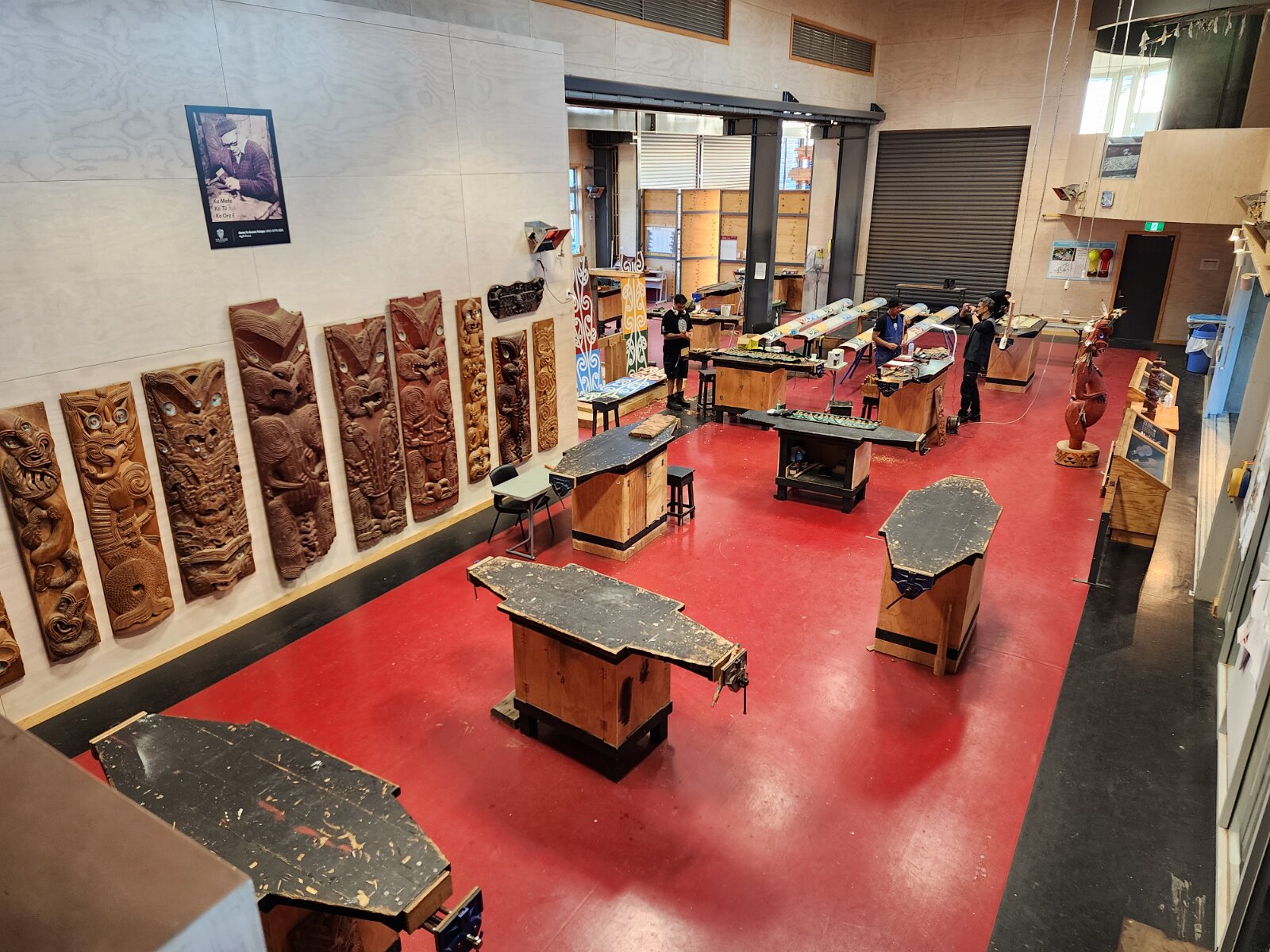
Te Puia is home to the national schools of wood carving, weaving, and stone and bone carving, where visitors can observe skilled artisans at work.

Traditional Māori carvings, a tekoteko, which is a stylized representation of a tribal ancestor and a focal point in a whare whakairo (carved tribal meeting…

Traditional Māori carvings, a tekoteko, the facial features and patterns typically hold symbolic meanings within Māori cosmology and history.

Some of the artists hard at work on another carving.

Near the geothermal area were some stone carved seats that are warmed by the activity below them. Here some of our tour group took a moment to rest and warm…

Here at the Mitai Maori Village, the Tūhourangi Ngāti Wāhiao people have a proud history of sharing their stories through song and dance spanning over a…

The Maori have a rich and significant culture. The tribal leaders introduced us to their customs as honored guests.

Here the ladies demonstrate a dance using poi. Poi originated With the Maori people of New Zealand and serves multiple purposes, including entertainment,…

Haka is a form of indigenous dance that encompasses multiple ceremonial purposes in Māori culture. It is a posture dance accompanied by chanted or shouted song.…

In the Maori Haka dance, the protrusion of the tongue and bulging of the eyes is a typical move. The traditional meaning of this move is to say to the enemy "my…